DRAFT Year end report in progress.

DRAFT Year end report in progress.

April 1, 2025 to March 31, 2026 in review  

DRAFT in progress. 
President’s Report, Prepared for April 15, 2026– 7:00 p.m.
The ARCHIVES, 178 McKellar St., Glencoe

As I complete my two-year term as President, I do so with deep appreciation for the strength of this organization and the people who sustain it. I am pleased to be moving into the role of Immediate Past President, and to welcome Norm McGill as incoming President.

Founded in 1978, the Glencoe & District Historical Society (G&DHS) was established to preserve and share the rich history of Southwestern Ontario, with a particular focus on the Glencoe area.

We are supported by a dedicated group of officers, directors,, and managers—those remarkable volunteers who have taken on defined roles. Their commitment is the foundation of our work. General Manager Harold Carruthers and Vice President Norm McGill keep it all going, day in and day out, providing steady operational oversight, community presence, and mentorship to volunteers.

The Executive enjoys meeting every quarter with our municipal CAO for Southwest Middlesex, Amanda Gubbels Gubbels.  We are the caretakers of this building and property and the municipality owns the building so we work closely on maintenance projects.  This includes watching over the cemeteries that no longer have a board of directors. 

Through regular communication, joint events, meetings, and informal networking, the Society deepened trust and collaboration across the heritage ecosystem. These relationships are foundational to shared advocacy, coordinated programming, and long-term sustainability.

A tracking system exists for recording volunteer hours, and this year we documented approximately _____ hours. This reflects only a portion of the total contribution, as much volunteer time goes unrecorded. The true scope of effort far exceeds what is captured on paper. This depth of commitment reflects both the passion of our volunteers and the trust placed in the Society as a steward of local heritage.  We constantly seek skilled local individuals to contribute according to their interests and passions. 

Expanded Outreach and Digital Capacity

Bill Simpson, Kellie Davenport, and Mary worked  on the WordPress Website https://glencoehistoricalsociety.ca/ .  The website is the place where we record our work, report on events, and share stories.  It has a growing repository of information that has a good search function. 

Working with the local libraries

With many local authors producing history books, historical fiction, and fiction rooted in local context, opportunities are emerging for joint programming that benefits both organizations. The Glencoe Library’s larger venue capacity complements the Archives, allowing for expanded audiences and more inclusive events. A joint author series has been planned for April and May 2026. 

Heritage Plaques and Community Engagement
The Society’s heritage plaque program remains a meaningful point of connection with the public. Community members regularly call, email, or visit the Archives to inquire about personalized plaques or gift certificates—often describing them as the “perfect gift” for those who are otherwise hard to shop for.

Plaques typically record details such as the original owner or builder, construction date, and profession, offering a tangible way to honour local history. To date, 15 plaques have been created or commissioned during the reporting period, contributing both to heritage awareness and modest earned revenue.

Stewardship of the Ken Willis Collection, Wardsville Museum

On March 13, 2025, the Glencoe & District Historical Society formally accepted custodianship of the Ken Willis Collection, housed at the Wardsville Museum (1787 Longwoods Road, Wardsville). Through a Deed of Gift and Declaration of Custodianship between Ken Willis and the G&DHS Executive, the Society acknowledged the significance of this collection and committed to its ongoing care in its current location. 

The Wardsville Museum—originally built in 1880 as a bank and later serving as a tailor shop and village library—remains a vital community asset owned by the taxpayers of SWM. Denise Corneil and Ken are working together to record a series of videos that document Ken’s role in the community as Official Historian.  We honour the vision and dedication of Ken and Sandi Willis to ensure  that Wardsville’s photographs, documents, and artifacts remain accessible to the public for generations to come.

Glencoe Transcript & Free Press Archives, Marie Williams

Marie Williams continues her dedicated work as historian and archivist for the Glencoe Transcript & Free Press collection housed here at The Archives.  She shares local history through photographs, articles, and curated content. Her consistent posting and thoughtful storytelling have significantly expanded the reach of the Society’s work.

Facebook insights indicate that the majority of engagement came through multi-photo posts (nearly 70%), followed by single images and shared links, demonstrating a strong public interest in visual and archival material. Notably, over 75% of views came from non-followers, showing that this content is reaching well beyond our immediate audience and attracting new interest in local history.

Deepening Understanding of Indigenous History and Treaties

The Society began more intentional learning around treaties and the deep time history of this region—over 13,000 years of Indigenous presence and stewardship. As part of this commitment to place-making and truth-telling, a dedicated space has been created within The Archives for an Indigenous display. A placeholder image—The King’s Beavers by Kent Monkman—signals both respect for Indigenous perspectives and an invitation for future collaboration and interpretation.

Public Storytelling and the Middlesex Banner

The Society strengthened its relationship with the Middlesex Banner and editor David Gomez. Through the shared “Archive Alley” feature, both the Middlesex Centre Archives and G&DHS contribute a full page of local history (page 19) each month. Approximately 12 features per year are submitted on behalf of G&DHS, and all are archived on the Society’s website, extending their reach and preserving them for future reference. 

Volunteers 

Executive for Apr 1, 2025 – March 31, 2026 

Mary Simpson, President 519-318-1074 mary@glencoehistoricalsociety.ca

Norm McGill, Vice President 519-287-2161 norm@glencoehistoricalsociety.ca

Ayako Macdonald, Director 519-802-6927 ayako@glencoehistoricalsociety.ca

Ken Beecroft, Past President 226-219-7017    allofus2@rogers.com

Diane Jedig, Treasurer 519-289-2053 d.jedig@glencoehistoricalsociety.ca

Denise Corneil, Secretary             519-693-7002 denisecorneil@glencoehistoricalsociety.ca

Harold Carruthers coordinates a schedule of volunteer shifts during open hours, enabling steady progress on describing, organizing, and caring for archival materials. Denise Corneil enters shifts into an online Google Calendar where those covering shifts can confirm or adjust.  The Archives are open Tuesdays 10 – 2 p.m; Wednesdays 2-4 and 7-9 and Saturdays 10 – 2.  And it’s a fun place to be. 

Managers:

Harold Carruthers, General Manager 519-857-2973 research@glencoehistoricalsociety.ca  

Archives and Collections – Norm McGill

Membership Secretary – Harold Carruthers

Facebook Page – Marie Williams

Publishing – Bill Simpson

Obituaries – Ken Beecroft

Programming – Mary Simpson,

Webmaster – Tyler Thomson

Louise Campbell – cataloguing family histories

Teams:  

Hospitality – Norm McGill, Maria Antunes, Erica Piercey(Event announcer), Kosta Vaklev. 

IT – Ayako Macdonald, Tyler Thomson, Bill Simpson 

Find-a-Grave & Cemetery Care – Ken Beecroft, Gerry Cross, Harold Carruthers

The Simpson Descendants –  Brian Huis, Wanda Simpson, Micheline Champagne-Johnston,  Wendy Bestward,  Mary Simpson,  Dennis Simpson, Jan Simpson 

Eddie Cemetery Board – Harold Carruthers, Ken Beecroft.

Wardsville Museum and Collections – Ken Willis, Official Historian; Denise Corneil 

Appin Ekfrid Museum – Heather Jacobs, Dunc Hodgson, Marilyn MacCallum 

Canada Barn Quilt Trails  Denise Corneil, Mary Simpson, Diana Jedig.  

Events and Activities

March 30, 2025 – A Stroll Through Time: Storytelling at Burns Presbyterian Church, Mosa

On March 30, 2025, the Glencoe & District Historical Society partnered with the congregation of Burns Presbyterian Church, Mosa, to host A Stroll Through Time, a storytelling afternoon celebrating the 190th anniversary of the church and the Kilmartin community that founded it.  Through shared memories and researched accounts, participants reflected on the perseverance, faith, and community life of early settlers who established Burns Presbyterian Church. The event reinforced the Society’s commitment to place-based storytelling and to supporting rural congregations as stewards of living heritage.

April 5, 2025 – Workshop: Capturing Living Oral Histories

On April 5, 2025, G&DHS hosted a hands-on workshop at The Archives focused on capturing living oral histories before those opportunities are lost. Facilitated by Carrie Jeffery, the workshop inspired participants to record their own stories and those of parents and elders. Carrie shared her personal experience using the Storyworth platform to document her father’s life, demonstrating how digital tools can reduce the technical burden while preserving the intimacy and beauty of storytelling. The session aligned closely with the Society’s archival mandate, encouraging community members to see themselves as active contributors to the historical record.

April 16, 2025 – Annual General Meeting

The Annual General Meeting for the fiscal year April 1, 2024 to March 31, 2025 was held in person on April 16, 2025, at The Archives, with 25 members in attendance. The meeting reviewed organizational activities, financial statements, and governance matters, and provided an opportunity for members to reflect on the Society’s progress and priorities.  Detailed report. 

April 19, 2025 – Author Reading: Mercy by Emma Stack

On April 19, 2025, G&DHS was honoured to host a soft launch and author reading for Mercy, the fourth novel by Emma Stack and the third in her War of 1812 series. Held at The Archives on Easter Saturday, the event was attended by Emma’s family and community members, creating a warm and celebratory atmosphere. The evening highlighted the Society’s ongoing support for local authors and historical fiction as an accessible and engaging way to connect contemporary audiences with Canada’s past.

May 7, 2025 – The Bandit of Skunk’s Misery

On May 7, 2025, Paul Langan presented a compelling talk on the legend of Orval Shaw, known as The Bandit of Skunk’s Misery. Delivered at The Archives with a simultaneous Zoom option, the presentation explored folklore, local crime legends, and the ways such stories shape regional identity. 

May 10, 2025 – Simpson Cemetery Cleanup

On May 10, 2025, descendants of the Simpson family worked in collaboration with the Municipality to carry out a cleanup of Simpson Cemetery. This hands-on stewardship activity demonstrated the importance of descendant engagement and municipal partnership in caring for historic burial grounds. The effort contributed to the preservation of an important heritage site while strengthening relationships between families, volunteers, and local government.

May 31 – June 1, 2025 – Wartime Homefront, Backus-Page House Museum

On May 31 and June 1, 2025, members of G&DHS attended Wartime Homefront at the Backus-Page House Museum in Wallacetown. This immersive, family-friendly event transported visitors to Canada during the First and Second World Wars through interactive exhibits and activities. 

June 7, 2025 – Attendance at Play by Len Cuthbert

On June 7, 2025, members attended a theatrical production by Len Cuthbert at the Strathroy-Caradoc community venue. Supporting local theatre  and playwrights aligns with the Society’s broader interest in storytelling, cultural expression, and the preservation of intangible heritage through performance.

June 11, 2025 – Virtual Tour: Josiah Henson Museum of African-Canadian History

On June 11, 2025, G&DHS hosted a virtual Zoom tour of the Josiah Henson Museum of African-Canadian History at The Archives. Museum staff guided participants through historic buildings and grounds while sharing stories of freedom seekers who crossed into Canada via the Underground Railroad. The tour included reflections from a descendant of these courageous individuals and deepened understanding of early Black presence in Ontario, reinforcing the Society’s commitment to inclusive and truthful history.

June 19, 2025 – Mechanical Musical Instrument Museum Tour

On June 19, 2025, members joined a private tour of the Mechanical Musical Instrument Museum, a unique collection owned by Mr. and Mrs. Nordermeer and organized by the Strathroy & District Historical Society. The visit fostered regional collaboration and highlighted the value of privately held collections in preserving specialized aspects of material culture.

June 22, 2025 – Decoration Day at St. Mary’s Anglican Church, Napier

On June 22, 2025, G&DHS promoted and supported the annual Decoration Day service at St. Mary’s Anglican Church in Napier. Organized by the local community, this long-standing tradition honours ancestors and maintains continuity with historic rural worship practices. The Society’s involvement helped broaden awareness and attendance while respecting community leadership.

July 17, 2025 – Executive & Member Session with Neil Johnson and Antony Upward

On July 17, 2025, G&DHS Executive members welcomed Neil Johnson and Antony Upward to a session focused on organizational sustainability and innovation. Antony’s presentation laid groundwork for later strategic work using the Flourishing Business Canvas.  Neil Johnson told us about recent developments in his marketing business and told us how to lift up our storytelling and history sharing for broader interest and appeal.  

July 19, 2025 – Glencoe Tartan Days 2025

During Tartan Days on July 19, 2025, G&DHS operated two heritage kiosks as well as welcoming people to The Archives. This high-visibility community event provided opportunities to share local history, engage new audiences, and showcase archival resources in a festive, accessible setting.

July 20, 2025 – Alexander Family Farm & Homestead Tour

On July 20, 2025, Kellie and her father Alexander Davenport,  hosted an open house the Alexander Family Farm and Homestead near Melbourne. Participants explored the circa-1870 farm, now in its sixth generation of continuous family operation. The tour highlighted agricultural heritage, continuity of land stewardship, barn architecture, and the lived experience of Scottish settler families.

September 18, 2025 – Bonnets and Bayonets: Women and the War of 1812

On September 18, 2025, a full house gathered at The Archives for Bonnets and Bayonets, a presentation by Emma Stack examining the overlooked roles of women during the War of 1812. The talk explored both well-known figures and the under-recorded lives of soldiers’ wives and families, addressing the challenges of researching and presenting this history and underscoring why it matters today.

September 19–20, 2025 – Glencoe Fair Display

During the Glencoe Fair on September 19 and 20, 2025, Harold Carrithers and Norm McGill, with support from Society members, curated a heritage display. The exhibit strengthened the Society’s public outreach and reinforced the Fair as an important venue for local history engagement.  Kudos to the Agricultural Society for a beautiful fair.  Every year it is tweaked, improved, and kept current with the times without losing its country charm and heritage. 

September 21, 2025 – Presbyterian Heritage Centre Open House

On September 21, 2025, members attended the launch and open house of the Presbyterian Heritage Centre in North Middlesex. 

September 25, 2025 – Book Launch: Behind the Bricks

On September 25, 2025, Mary Simpson attended the launch of Behind the Bricks: The Life and Times of the Mohawk Institute at the London Museum. The important book brings together Indigenous and settler voices, archival research, and survivor testimony to examine the layered history of the Mohawk Institute. 

October 16, 2025 – Members Meeting & Launch of the Publishing Circle

At the October 16, 2025 Members Meeting, G&DHS formally established a Publishing Circle and approved $2,000 in seed funding in the 2026 budget. The decision marked a significant step toward moving local research, manuscripts, and stories into print, ensuring long-term preservation and wider access to community history.

October 22, 2025 – Building a Cenotaph for the Fallen

On October 22, 2025, Blair Ferguson and Colin McGugan presented Building a Cenotaph for the Fallen at The Archives. The presentation told the story behind Dutton-Dunwich’s long-overdue cenotaph, honouring local men who died in the First and Second World Wars, including Victoria Cross recipient Ellis Wellwood Sifton. The event highlighted citizen-led remembrance and historical accountability.

November 8, 2025 – Archival Donation: Bertie McFarlane Scrapbook

On November 8, 2025, Caroline Gough and her daughter, Betty Ann Carr, formally donated the Bertie McFarlane scrapbook fonds to The Archives. This significant contribution was one of several important archival donations received during the year, enriching the Society’s collections and preserving irreplaceable community records.  For now, the extensive fond will remain at Caroline’s home. 

November 11, 2025 – Remembrance Day

On November 11, 2025, G&DHS members attended Remembrance Day ceremonies in Glencoe, Newbury, and Dutton, despite challenging weather conditions caused by a heavy snow squall from Lake Huron. Participation honoured local veterans and reinforced the Society’s role in civic remembrance.

November 15–16, 2025 – June Journey / Turas an Ògmhìos

The Glencoe & District Historical Society proudly sponsored June Journey / Turas an Ògmhìos, a Gaelic play written by Trevor Aitken and performed at the historic Tait’s Corners Schoolhouse. Three sold-out performances drew enthusiastic audiences and showcased the power of language, memory, and place in telling regional stories.

November 17, 2025 – County Archives study

On November 17, 2025, representatives from archival and heritage organizations across Middlesex County met with newly appointed CAO Paul Shipway. On November 25, 2025, Middlesex County Council passed a motion to undertake a feasibility study toward establishing a County Archives. Mayor Mayhew has expressed support for a County Archives.  The study should be completed in 2026.  Work first began on this project in 2002.  

November 19, 2025 –Maria Moore Lecture

Over 40 people attended Maria Moore’s lecture on the Old Colony Mennonite experience at Glencoe Presbyterian Church, demonstrating strong community interest in complex migration histories.

Feb 12 – Capturing Oral Histories Virtual Workshop

Members participated in a virtual workshop led by Sarah Walker of the North Dakota State Archives, gaining practical guidance on conducting and preserving oral history interviews. The session emphasized storytelling as conversation, ethical considerations, and the importance of capturing lived experiences to enrich local archives.

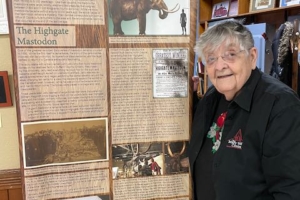
Feb 18 – The Highgate Mastodon with Tom Chase

Members attended an on-line virtual presentation by Tom Chase of the North Dakota Heritage Center, exploring the discovery and significance of the Highgate Mastodon. The talk connected Ice Age history to local heritage, complementing the mastodon tooth held in the Archives collection and deepening understanding of prehistoric Southwestern Ontario.

Feb 24 – Ancestry Junk Journaling Workshop

Held in partnership with the 162 on Main Art Collective, this hands-on workshop welcomed guest instructor Lori Watson, who guided participants in creating personal journals using repurposed materials. The session combined creativity and storytelling, encouraging participants to explore family history and memory-keeping in an informal and expressive format.

Supporting Private Collections & Independent Curators

The Glencoe & District Historical Society recognizes that some of the most rare and irreplaceable aspects of our cultural heritage are preserved not in large institutions, but through the lifelong dedication of private collectors.

The McEachren Collection @ Forty-87

The McEachren Collection @ Forty-87 is an extraordinary private museum curated by local historian and collector Dave McEachren. Inspired at the age of ten after seeing fellow farm boys display their toy collections at the Glencoe Fair, Dave made a deliberate choice to stop “playing in the dirt” with his farm toys and begin collecting them instead. Decades later, that childhood spark has matured into a world-class collection and a publicly accessible museum.

The McEachren Collection @ Forty-87 features more than 40 full-size tractors, thousands of farm toy models, and tens of thousands of pieces of memorabilia and sales literature, with a particular emphasis on John Deere equipment and local dealer history. The collection documents not only machinery, but also the evolution of agricultural technology, marketing, rural labour, and farm life in southwestern Ontario. G&DHS values this collection as an important complement to institutional archives and sees private museums such as Forty-87 as essential partners in safeguarding stories that might otherwise be lost.

Mechanical Musical Instrument Museum (Nordermeer Collection)

On June 19, 2025, G&DHS members participated in a private tour of the Mechanical Musical Instrument Museum, an extraordinary collection owned and curated by Mr. and Mrs. Nordermeer and organized by the Strathroy & District Historical Society.

These instruments reflect the intersection of craftsmanship, engineering, entertainment, and domestic life, offering insight into how music was produced and experienced before the age of electronic amplification and digital media. Such collections require deep technical knowledge, patience, and sustained care—qualities exemplified by the Nordermeers’ stewardship.

Work with other organizations: 

Objective –  build close, working relationships with all our local groups, our regional heritage groups, and the elected reps and staff people of Southwest Middlesex, Newbury  and County of Middlesex. 

We do our best to support other cultural and heritage groups in our district: 

  • Your Wardsville – Wardsville Museum – Official Historian Ken Willis 
  • Appin Ekfrid Museum – Heather Jacobs, Dunc Hodgson, Marilyn MacCallum
  • A Split Village at a Crossroad, Melbourne, Ontario.  JoAnn Lucas Galbraith
  • Tyrconnell Heritage Society – Backus Page House and Museum
  • Committee to Establish a Middlesex County Archives
  • Burns Presbyterian Church – Mosa 
  • Glencoe Comprehensive Library
  • Ontario Historical Society 
  • London & Middlesex Historical historical Society
  • London & MIddlesex Branch – Ontario Genealogical Society.  Strathroy & District Historical Society – great monthly programs.  
  • Upper Thames Military Re-enactment Society.  They organize the annual memorial in early March every year.  
  • Chippewa of the Thames cultural staff 
  • History Symposium – monthly events. 
  • Municipality of Southwest Middlesex 
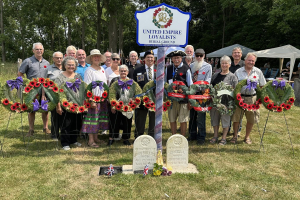
  • United Empire Loyalists 
  • Royal Canadian Legion Reg Lovell Br 219, Glencoe
  • Royal Canadian Legion Branch 510, Melbourne
  • Words – by Josh Lambier.  Monthly author series often featuring authors who write historical fiction and local histories. 
My Treaty Responsibilities –

My Treaty Responsibilities –

by Mary Simpson, Old River Farm, Mosa Township, Treaty 21.

Attending Mark French’s presentation at the Glencoe and District Historical Society (18 March 2026) felt like waking up to a responsibility I had never fully acknowledged. Mark, an Elder from Deshkan Ziibiing (Chippewas of the Thames First Nation) and husband of our G&DHS treasurer Diana Jedig, spoke about treaties not as dry legal relics but as living relationships. 

As a farmer and settler whose family names – Simpson, Moorehouse, Pearce, McEachran, Stalker – are written into this land, his words left me moved. We begin meetings with a land acknowledgement, yet what follows? Learning about the treaties themselves, understanding how they were made in good faith, and recognizing the complex histories and losses Indigenous peoples have endured are our next steps. This piece is my attempt to articulate what I learned.

Mark French and his two grandchildren explain the significance of this wampum belt. March 19, 2026.

Treaties as Living Relationships

In Mark’s talk I learned that treaties are far more than legal documents. Indigenous peoples from this region have long understood treaties as formal agreements that create a framework for a relationship and an ongoing process for maintaining it. In Anishinaabe world views, all life is interconnected – plants, animals and other beings have spirit and agency, and humans carry reciprocal duties of care. A treaty establishes ongoing responsibilities to one another, to other beings and to the land.

Mark showed how Wampum belts (the ones shown here were crafted by his brother) are a powerful visual record of these agreements. Wampum belts are made of purple and white shell beads woven into symbolic designs that hold the words and pledges spoken in their presence. Each belt is a living presence that connects present treaty partners with generations past. When a belt is brought out, its story and obligations are renewed. These designs were not just art – they are instructions for relationship.

The originals back in the day were painstakingly crafted from small beads laboriously carved out of quahog shells.  No wonder wampum, a currency, was so highly prized.  No wonder the beads manufactured in Europe were welcomed along with other technological breakthroughs – iron pots, kettles, knives, and axes.  

Wampum beads were crafted from purple and white quahog clam shells (Mercenaria mercenaria). They signify a sacred, living record of history, diplomacy, and spiritual beliefs for Northeast Indigenous nations. Far beyond currency, these shells symbolize peace, authority, and the interconnectedness of life, used to bind treaties, honor leaders, and preserve ancestral wisdom.

Local Treaties in Southwestern Ontario

Middlesex County rests on multiple treaties. Locally, we acknowledge that we are on the traditional lands of the Anishinaabek, Haudenosaunee, Lūnaapéewak and Attawandaron and that the area is covered by several treaties: the Two Row Wampum/Silver Covenant Chain, the Beaver Hunting Grounds (Nanfan) Treaty of 1701, the McKee Treaty of 1790, the London Township Treaty of 1796, the Huron Tract Treaty of 1827, and the Dish with One Spoon Covenant

Responsibilities of Settlers

Settlers are treaty people. I had always thought treaty rights were something only Indigenous peoples had, but treaties are agreements that bestow rights and obligations upon both parties. Historic treaties established an ongoing relationship between settlers and First Nations where each group asserted rights and responsibilities in relation to the other. These agreements were meant to last “as long as the sun shines, the grass grows, and the river flows”, a phrase that emphasises permanence.

Being a settler treaty person means recognising both the rights granted to us and the responsibilities that accompany them. 

Settler rights under treaties included freedom of religion, the right to share the land, the right to pursue agriculture and economic activities, the right to political self‑determination and the right to peace and goodwill

These rights came with obligations: to respect Indigenous spiritual traditions, to recognise Indigenous control over reserves and resources, to honour Indigenous sovereignty and to maintain peace and goodwill. 

Non‑Indigenous Canadians have a responsibility to know the treaties they are part of and the rights and responsibilities they have through them. The Indigenous Foundation notes that to honour treaty responsibilities, we must hold the Canadian government accountable when it violates treaty obligations. This means educating ourselves, insisting that governments respect treaties, and supporting Indigenous communities when they assert their rights.

Mark also spoke about how Indigenous peoples have endured broken promises, land theft, residential schools and other systemic violations despite upholding their treaty responsibilities. Settlers often colluded in these injustices by refusing to understand their own history. Recognising our own ancestors’ complicity does not condemn them but calls us to do better.

Mark explains the design and significance of the wampum – a sacred, living record of history, and diplomacy.

Being a Treaty Person: Learning and Action

KAIROS Canada summarises what it means to be a treaty person: everyone living in North America – Turtle Island – is a treaty person, and treaties are living relationships meant to guide how we live together based on mutual respect, peace and sharing. Being a treaty person brings responsibilities:

  • Learn the truth about the land we live on. Start by discovering whose traditional and treaty territory we reside on. Tools like Native-Land.ca can help.
  • Uphold the spirit and intent of the treaties. Treaties were agreements to share the land, not to surrender it. We must honour sharing and reciprocity.
  • Listen to and follow the leadership of First Nations. Indigenous peoples continue to uphold their side of treaty responsibilities despite systemic injustices. Our role is to support and not override their leadership.
  • Reject erasure, stereotypes and colonial myths. This includes challenging narratives that depict treaties as mere land sales or Indigenous peoples as obstacles to progress.
  • Take action towards justice and reconciliation. This might include supporting Indigenous land claims, participating in treaty education and engaging in land stewardship initiatives.

As farmers, we can also take concrete steps. In Saskatchewan, there is an interesting program called the  Treaty Land Sharing Network which encourages non‑Indigenous landholders to voluntarily open their privately owned land to Indigenous peoples for cultural practices, ceremony, harvesting and gathering. This grassroots initiative recognises that treaties were meant to share land, not to exclude. By building relationships through land-sharing, the network renews treaty responsibilities and helps Indigenous land users reconnect with their traditional territories. 

Reflection from a Settler Farmer

I know that the land is not something owned outright but loaned to us by previous generations and entrusted to us for future ones. I love the matriarchal reverence for ancestors, respect for elders and for the earth that nurtures us.

Coming from a long line of settlers, the McEachrans, the Pearces, Stalkers…  I take pride in the hard work of my ancestors – particularly my many great grandmothers and their daughters.  The grinding labour to clear fields, plant, harvest, grind grain, feed and cloth their families.  But the truth is: my clans’ prosperity would not have been possible without treaties that opened land to settlement and the dispossession of Indigenous peoples.  -Mary

Mark spoke about how Indigenous communities view ancestors not as distant memories but as active participants in community life, guiding decisions and reminding us of responsibilities. 

I also learned that acknowledging the land is only the beginning. Many land acknowledgements emphasise gratitude and respect for the natural world, but they conclude by stressing that awareness means nothing without action and encouraging everyone to take steps toward decolonising practices. Mark challenged us to move beyond reciting acknowledgements and to engage with treaty education. Treaties involve complex histories; some include fair negotiations, while others involved coercion or misunderstanding. Many treaties were not honoured, leading to the erosion of culture, language and land.

The injustices that plagued Indigenous communities – broken treaties, residential schools, dispossession – are mirrored in today’s world where economic deals often harm those without power. As settlers’ descendants, we must see the patterns: the same disregard for human dignity continues when corporations put profit over people. When we understand that the exploitation of Indigenous peoples is part of a larger pattern of injustice, we can better align ourselves with those fighting for justice today.

Moving Forward: Commitments from the Heart

Writing this piece has prompted me to articulate personal commitments that flow from my treaty responsibilities:

  1. Educate myself and others. I will learn about the treaties that cover the land where I live and farm. I will seek out Indigenous perspectives on these treaties, recognising that official documents often omit Indigenous voices.
  2. Support Indigenous leadership and initiatives. When Indigenous communities call for action – whether it is opposing harmful development projects, asserting land rights or protecting water – I will listen, amplify and support them. This includes holding governments accountable for treaty obligations.
  3. Participate in land sharing. Maybe we can create a Treaty Land Sharing Network in Ontario and open parts of our farm for Indigenous cultural practices and harvesting. Sharing the land honours the spirit of treaties and builds relationships based on reciprocity, and sounds like fun. 
  4. Challenge colonial narratives. When conversations around me diminish Indigenous rights or depict treaties as outdated, I will challenge those views. I will share what I have learned about treaties as living agreements and about our shared responsibilities.
  5. Teach future generations. As a parent and community member, I will ensure that next gen farmers understand that they are treaty people, too. They need to know whose land they farm and the obligations that come with that privilege.

Writing from the heart means acknowledging both the pain and the hope. The pain lies in the injustices inflicted on Indigenous peoples and the realisation that my own prosperity is tied to that history. The hope lies in the possibility of renewed relationships based on honesty, respect and shared stewardship. Treaties are not relics; they are living promises

By Mary Simpson, Old River Farm, April 7, 2026

Mar 18, 2026 – Treaty 21 and the Longwoods Treaty:

Mar 18, 2026 – Treaty 21 and the Longwoods Treaty:

A 200-Year-Old Agreement in Southwestern Ontario

Date & Time: Wednesday, March 18, 2026 – 7:00 p.m.
Location: The Archives, Glencoe
Guest Speaker: Mark French
Hosted by: Glencoe & District Historical Society

On March 9, 1819, representatives of the Chippewas of the Thames First Nation and the British Crown signed what became known as Treaty 21—the first of three written versions of the agreement now commonly called the Longwoods Treaty. This treaty set in motion a process that still shapes southwestern Ontario today.

The Longwoods Treaty covered land north of the Thames River, stretching from Strathroy and Komoka in the east to Oil Springs in the west, Bothwell in the south, and Watford in the north. While the second version (1820) repeated the same boundaries, the third version (1822) listed the land as 580,000 acres—a “rounding up” that continues to raise questions about accuracy and fairness.

Unlike earlier treaties, such as one that exchanged two million acres south of the Thames for a one-time payment of goods worth less than $5,000, Treaty 21 introduced the concept of an annuity. For the Longwoods Treaty, the Crown promised $2,400 annually, in perpetuity. While the payment is still made today, it goes into Canada’s consolidated revenue fund rather than directly to the First Nation.

Historical records also show that Indigenous leaders came to negotiations with their own vision for the future, including land for additional reserves, a blacksmith, and support for animal husbandry. Yet none of these provisions were written into the treaty.

Language and worldview also played a role in shaping outcomes. The treaty text, rooted in British legal nomenclature, could not be translated directly into Anishinaabemowin. The very concept of drawing lines on the ground to buy and sell land was foreign to the First Nations worldview, which saw the people as stewards of the land rather than owners.

As Mark French explained, Treaty 21 is more than a historical document—it is a window into the complex relationships, misunderstandings, and negotiations between Indigenous peoples and the Crown. It also raises questions about what was truly agreed to, and how responsibilities to the land continue to this day.

Mary Simpson’s piece on her Treaty Responsibilities.

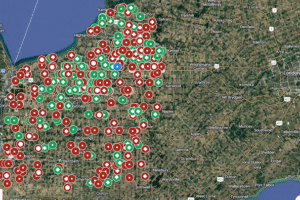
For more context, you can view the official map of Ontario treaties here:
👉 Map of Ontario Treaties and Reserves.

The Royal Proclamation

The Royal Proclamation

It’s been called the Indigenous Magna Carta and the Indigenous Bill of Rights. But what exactly does that mean? In this episode Falen and Leah dive into the history of the Royal Proclamation, a document that is often spoken about when discussing the history of Canada and Indigenous land rights. But what do we really know about it? link to podcast

Incudes detail from Rick Hill about wampum belts and the canoe analogy.

Source: The Secret Life of Canada

Archibald William (A.W.) Campbell, b. May 14, 1863 in Wardsville

Archibald William (A.W.) Campbell, b. May 14, 1863 in Wardsville

By Marie Williams, for the G&DHS Facebook Page, January 9, 2026:

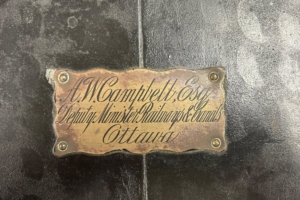
Among the many artifacts at the Glencoe and District Historical Society Archives are some personal items of Archibald William (A.W.) Campbell, who was born on May 14, 1863 in Wardsville.

His father had immigrated to western Upper Canada from Caithness, Scotland and his mother had been brought up on the family farm in Ekfrid Twp. The Campbells moved to the farm from Wardsville in 1864. Archibald received his early education in local schools and graduated from St. Thomas High School. He apprenticed in engineering and surveying for three years to the county engineer of Middlesex and Elgin before being commissioned as a provincial land surveyor in April 1885.

In 1888, he joined the Canadian Society of Civil Engineers and formed a private partnership, specializing in waterworks, drainage systems and bridges. In 1891 Campbell became city engineer and was a founding editor of the monthly “Municipal World” (St. Thomas). He compiled its “Engineering Section.”

Campbell was particularly interested in improved roadways and soon became recognized as a progressive advocate. “A good road-bed pays,” he wrote in May 1892. “It saves power, shortens distance and time, increases speed, insures comfort and safety, and is, in whatever way you state it, a good investment.” Public attention to roads had been eclipsed by enthusiasm for railways but, in the 1890s, the bicycle craze and the formation of the Ontario Good Roads Association spurred renewed interest. Campbell’s concern was practical: the construction and maintenance of good roads, from the farm gate to the markets and the grain elevators, meant that horses could easily pull heavier loads and that transportation costs could be lightened and consumers’ prices lowered. He was also interested in improving the professional status of engineering.

Norm McGill models Campbell’s uniform at The Archives in Glencoe.

Roadwork was the responsibility of municipalities, which in earlier deys often farmed the tasks out to influential citizens who then employed statute labour, at times resulting in shoddy standards. Campbell used the publication “Municipal World” to champion the use of trained engineers. Campbell’s advocacy led to his appointment in April of 1896 as provincial instructor in roadmaking, under the Minister of Agriculture. In 1900, he became Deputy Minister.

Read more
A Treasured Family Archive Finds Its New Home

A Treasured Family Archive Finds Its New Home

By Mary Simpson and Caroline Gough, November 8, 2025.

The Glencoe & District Historical Society is absolutely buzzing this week (Nov 8, 2025) . A remarkable gift has just arrived at The Archives: the enormous scrapbook collection lovingly created over a lifetime by Mrs. John Alberta (Bertie) MUNSON McFarlane. Her daughter Caroline and granddaughter Betty Ann have generously entrusted this treasure trove to our care.

Bertie was one of those extraordinary rural women who quietly carried the heartbeat of a community. She clipped everything. Births, marriages, deaths, retirements, accidents, reunions, graduations, memorable storms, championship teams, church news, farm sales… you name it, she saved it. 

A portion of her scrapbook fonds: Mrs. John “Alberta” McFarlane of R.R. #4, Appin, ON

This collection is enormous. What you see in the photo is perhaps one-fifth of the total “fonds” . The rest fills an entire wall of boxes.  In archival science, a fonds is a group of documents that share the same origin and have occurred naturally as an outgrowth of the daily workings of an individual, or organization

Caroline Gough, Bertie’s daughter, told us that as a girl she never quite understood her mother’s hobby. Caroline loved horses and dance, while her mother spent evenings with scissors, glue, newspapers, and her other talent, fine needlework. But now she sees the magnitude of what her mother created: a family and community archive of extraordinary depth and love.

Read more
Feb 12: Capturing Oral Histories Virtual Workshop

Feb 12: Capturing Oral Histories Virtual Workshop

Members of the Glencoe & District Historical Society recently joined a live online presentation by Sarah Walker on the art and practice of gathering oral histories. The session was both practical and inspiring, reminding us that capturing memories is not simply about recording sound—it is about creating space for storytelling, trust, and preservation.


We learned that an oral history interview is closer to being a thoughtful radio host or podcast interviewer than a researcher reading questions from a page. Preparation matters greatly, but so does allowing conversation to unfold naturally.

Why Oral Histories Matter

Oral histories capture:

  • Personal experiences not found in written records
  • Community traditions such as foodways, farming practices, celebrations, and daily life
  • Emotional tone, humour, and memory that enrich archives
  • Stories that might otherwise be lost within a generation

Mary Simpson’s Reflections on a Live Presentation by Sarah Walker, Head of Reference Services, North Dakota State Archives.  Reference: State Archives Facebook page

Read more
Journey of the Highgate Mastodon

Journey of the Highgate Mastodon

Written by Merry Helm. Reposted from the Dakota Datebook Archive. July 23, 2004. Details of the Highgate Mastodon museum tour Feb 18, 2026.

In the spring of 1890, William Regcraft found some bones while digging a ditch on his uncle’s farm, one mile from Highgate, Ontario. A hardware merchant named William Hillhouse bought the bones, and he and his uncle, John Jelly, also bought the right to continue excavating. What they found was almost an entire skeleton of an Ice-Age mastodon, relative of the modern elephant.

Read more
Behind the Bricks, Truth & Reconciliation and the Rebirth of the Mohawk Institute Museum

Behind the Bricks, Truth & Reconciliation and the Rebirth of the Mohawk Institute Museum

Known locally as the “Mush Hole,” the Mohawk Institute in Brantford, Ont. was Canada’s oldest and longest-running residential school. But on September 30, 2025, it officially became an interpretive historic site. On that solemn day, what was once a place of suffering, erasure and intergenerational trauma was reborn as a museum, teaching site—and a space for truth-telling, remembrance and hope.

The transformation was decades in the making, built on persistent activism, deep community engagement, archival research, restoration efforts and, above all, the resolve of survivors and Indigenous leadership that this history not be buried.


Behind the Bricks: A New Chapter

At the London Museum on September 25, Mary Simpson attended the launch of Behind the Bricks: The Life and Times of the Mohawk Institute. Edited by Richard W. “Rick” Hill Sr., Alison Norman, Thomas Peace and Jennifer Pettit, Behind the Bricks draws together Indigenous and settler historians, community voices, archival researchers, archaeologists and survivors to reconstruct the layered history behind the walls of the institute. Another launch event was held by the Ontario Historical Society a couple nights later.

The book begins by tracing the school’s founding and historical context, before delving into the its architecture and physical spaces, the curriculum and daily regimes imposed on children, religious and governmental oversight, student resistance, and the long process of commemoration and preservation. To close, Behind the Bricks allows survivor voices to speak directly, offering their unique perspectives of lived experience.

The editors have emphasized that the Mohawk Institute was not an isolated institution—it was in many ways a model or prototype for national residential school policy. The takeaway: What can this case teach us about the wider system of Indigenous schooling and control in Canada? How did notions of “civilization,” assimilation and authority operate in this place? How do we reckon with the spaces—the bricks, corridors and dormitories—that bore witness to so much pain? Behind the Bricks does not offer easy answers, but rather invites readers into the difficult task of listening, digging and reflecting.


And then there are the Elders

And then there are the Elders

Allen Deleary of Bkejwanong (Walpole Island First Nation) speaking recently at a special Indigenous Lifeways Workshop locally. Allen shared teachings and insights from Anishinaabe traditions, exploring how Indigenous lifeways continue to guide relationships with the land, water, and one another. The evening included a community discussion, offering space for reflection, dialogue, and shared understanding:

Allen Deleary of Bkejwanong


And then there are the Elders:

Simon Winchester:

They keep a steady hand upon the tiller. That, in essence, seems to be the greatest and most enduring strength of aboriginal peoples around the world. The frantic pace of modern life, the endless bursts of technological advance, the alarums and excursions, and our various political and military adventures all come and go, but all the while and in the background, keeping their wary and watchful eyes upon us, are the wise ones…

Read more

A Canoe for His Grandfather

By Mary Simpson with Ron McRae.

When Ron McRae first began researching how to build a cedar strip canoe, it was during the COVID outbreak and at the urging of his son, Steven. Ron had recently retired and he and his wife, Linda had purchased two plastic kayaks. They enjoyed getting out on the water, but Ron found the seating position painful on his lower back. So he began researching canoes. 

“I found Bear Mountain Boats in Peterborough,“ Ron recalls. “They sell cedar-strip canoe kits and have all these resources for amateur builders. I contacted them, hoping to register for a workshop with Ted Moores, the founder of the company and the man who wrote Canoecraft, the definitive how-to book for canoe builders. But his wife told me Ted was now in his seventies and had given up his in-person courses. She then said something that stuck with me: ‘Why don’t you buy the book, read it, and call me back if you still think you can do it?’”

So he did.

And he could.

And he did.

Ron ordered his first kit, which came with all the essential parts: carefully milled cedar strips in a range of colours from dark brown to nearly white, ash gunnels, deck pieces and seats and hardware. The key to a sound, straight tracking hull is the molds which shape it. Ron decided to purchase laser cut molds which were perfect, rather than risk cutting them by hand with a jigsaw. He chose a design that balanced form and function= something stable, not too long and suitable for beginners.

“I picked the Freedom 15 design,” he says. “It’s easy to paddle, good for two people or as a solo. I thought it would be a relatively easy build and perfect for novice paddlers like Linda and me.”

“I built that first canoe in about six months and really enjoyed the process. Linda and I have been exploring Southern Ontario paddling opportunities in it for the past three years and we seldom go out on the water without a comment on the beauty of our cedar strip canoe.”

Cedar strip kit – centre line hull
Read more
The Alexanders: A Migrant Story 

The Alexanders: A Migrant Story 

By Kellie Davenport 

As the agent of his excellency the Right Honourable Lord Howden, Her Majesty’s Ambassador at Madrid, I hereby certify that Mr. James Alexander has been employed as a farm manager on his Lordship’s Grimston Estate for six years.

By his own desire, he will leave this country to try his fortune in America. I have great pleasure in testifying that his conduct has always been most trustworthy, steady and exemplary in the extensive farm works carried on here. 

Also, from his good education and experience in farming, I consider him well qualified to conduct and manage any agricultural operation in all its branches.

—M. Harington, Grimston Park, Tadcaster, Yorkshire. 

Penned in 1853, this letter of reference launched the Alexander family legacy in Canada—and a long line of dedicated Ontario farmers. More than 170 years later, the Alexanders’ original crown settlement south of Melbourne, Ont. is still a working cattle farm, now into its sixth generation of the family. 

These deep agricultural roots sprouted in rural Forfarshire, Scotland, before blossoming on a Yorkshire estate owned by a British lord and later blooming across the ocean in Southwest Middlesex. The Alexander story is a true migrant tale, showcasing the upheaval, ambition, dedication and success of newcomers to Canada.  

Read more
From Yorkshire to Ekfrid and Back Again

From Yorkshire to Ekfrid and Back Again

By Kellie Davenport 

As our Uber approached the stately manor house at Grimston Park, a historic North Yorkshire estate about 25 minutes west of York, the size of the property immediately struck us. The sprawling 2,500-acre estate was a far cry from our quaint 200-acre family farm in Ekfrid Township near Melbourne, Ont. 

But surprisingly, we felt right at home. 

Along with my parents, Debbie and Alexander, we had travelled to this far-flung county to visit this rather impressive place because our ancestor James Alexander (1824-1895), my three-times great-grandfather, once lived, worked and worshipped here. (Though he likely arrived here via Scotland by horsedrawn coach, not electric car.) 

Read more
McAlpine–Smith Family Fonds

McAlpine–Smith Family Fonds

Dec 6, 2025. The Archives, Glencoe – Donation and provenance provided by Kathleen Scott, great grand daughter, St. Thomas, Ontario. Received by Mary Simpson and Norm McGill. 

This collection of items belonged to the McAlpine and Smith families of 3528 Oil Field Road, near Glencoe, Ontario. At the center of the family story is the marriage of Rebecca Smith and Alexander McAlpine, who were married on April 12, 1899. Their illustrated marriage certificate, preserved inside Alexander’s family Bible, is one of the key artifacts in this collection.

Rebecca and Alexander lived on the family farm on Oil Field Road. After Alexander’s death, the property was eventually purchased by Jim Schieman, and the McAlpine family maintained a warm friendship with the Schieman family for many years afterward. Several items in the collection reflect this long community connection.

Also included are photographs and records connected with the Zavitz, Schieman, and Peters families, who were neighbours and later stewards of the original McAlpine farm. A wedding photo of Peter Schieman’s son is part of this grouping.

Rebecca and Alexander lived on the family farm on Oil Field Road. After Alexander’s death, the property was eventually purchased by Jim Schieman, and the McAlpine family maintained a warm friendship with the Schieman family for many years afterward. Several items in the collection reflect this long community connection.

These artifacts—Bibles, hymnals, books, and photographs—together illuminate more than a century of rural family life in Southwest Middlesex, documenting marriages, migration, faith, work, and community connections passed down through generations. Thank you Heather for entrusting these treasures to the Glencoe & District Historical Society. 

Read more
Historic Step Forward: County to study potential for Archives

Historic Step Forward: County to study potential for Archives

Middlesex County Approves Feasibility Study for County Archives

In a landmark and unanimous decision, Middlesex County Council has voted to move ahead with a Middlesex County Archives Feasibility Study, marking the most significant progress to date toward establishing a permanent county-wide archives.

In November 2025, the motion—brought forward by Mayor McMillan and seconded by Mayor DeViet—sparked thoughtful questions around the council table, with councillors expressing both strong support and prudent concern for the project’s long-term sustainability. Following discussion, the vote passed unanimously, prompting applause from the gallery filled with advocates, historians, and community supporters.

For the Committee to Establish a Middlesex County Archives (CEMCA), this moment represents a breakthrough many years in the making. The idea of a county archives has circulated for decades. CEMCA has spent the past several years building awareness, engaging municipalities, and championing the need for proper stewardship of Middlesex County’s more than 225 years of documentary heritage.

While the vote does not commit the County to building an archives at this stage, it does confirm the County’s intention to undertake a comprehensive, professionally guided study. This study will assess needs, gaps, costs, and opportunities—ensuring that decisions about preserving local history are grounded in strong evidence and reflect today’s economic realities.

CEMCA emphasizes that all heritage, cultural, and community organizations throughout Middlesex County will be encouraged to participate in the study process if invited. Broad input will be essential to reflect the diversity of local collections, stories, and archival needs.

This important step could not have happened without the many residents, volunteers, historians, journalists, and local groups who wrote letters, attended meetings, raised awareness, and kept the conversation alive.

CEMCA extends heartfelt thanks to all supporters and media partners.
The work continues—but the door is now open.

Mary Simpson, President, 2024-2026, Glencoe & District Historical Society

Read more
Understanding the Old Colony Mennonite Experience

Understanding the Old Colony Mennonite Experience

Tracing a Journey of Faith: Author Maria Moore shares the migration history of Old Colony Mennonites and her own family’s story during a presentation hosted by the Glencoe Historical Society.


The Old Colony Mennonite story stretches across continents and centuries—a journey shaped by faith, identity, and the ongoing search for a place where religious convictions can be lived without interference. This history, and its enduring impact, was the focus of a recent presentation by author Maria Moore at the Glencoe Presbyterian Church, hosted by the Glencoe & District Historical Society.

Read more
A Remarkable Revival of Scots Gaelic Heritage at Tait’s Corners

A Remarkable Revival of Scots Gaelic Heritage at Tait’s Corners

June Journey / Turas an Ògmhìos

A Remarkable Revival of Scots Gaelic Heritage at Tait’s Corners

Written by Trevor Aitkens | Directed by Antje Giles
Performed November 15–16, 2025

The Glencoe & District Historical Society was honoured to sponsor and support June Journey / Turas an Ògmhìos, a beautifully crafted Gaelic play written by Trevor Aitkens and hosted at the historic Tait’s Corners Schoolhouse. Over three sold-out performances on November 15–16, 2025, audiences filled the lovingly restored 1910 one-room school to experience a deeply moving, often humorous, always heartfelt return to the early school days of our region.

A Cast of 18 Bringing 1910 Back to Life

The production featured a remarkable cast of 18 local actors, intergenerational in age and representing families from across Southwest Middlesex and Strathroy-Caradoc. Their portrayals of teachers, students, elders, and neighbours transported audiences directly into a 1910 classroom at the very moment when Scots Gaelic—the language of their parents and grandparents—was slipping out of daily use.

The cast brought warmth, laughter, tenderness, and occasional heartbreak to the stage. Audience members noted that the play felt “like watching our great-grandparents speak again.”

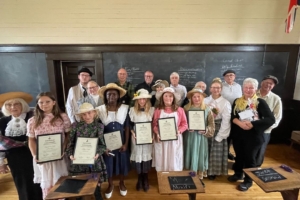
The cast takes a bow. the students earned a certificate for their commitment to learning Gaelic and their lines.

A Story Rooted in a Lost Language

Read more
Gaelic Heritage

Gaelic Heritage

The Glencoe area was settled predominately by Scottish immigrants many of whom spoke Gaelic.

Duncan Mitchell (1838-unknown) from Metcalfe Township lived on the South 1/2 of Lot 18, Conc 13. He had this book of 41 Gaelic poems published localy in Rodney, Ontario in 1887. This book was generously donated to the Historical Society from the McAlpine family in 1986, and several poems were translated by Donald Campbell in 1999. 

D. Campbell included notes with the translation explaining that most Gaelic speakers did not learn to read and write from formal education, and that to a modern reader his spelling is very poor. He surmises that Duncan was likely quite a fluent speaker who wrote in Gaelic using what he had learned from personal study and practice. Campbell also states that he clearly used a regional dialect of Gaelic and that he was writing according to his accent, which was common. 

Druchd Na Beinne (Original Gaelic Text)
Druchd na beinne, druchd na beinne,
Druchd na beinne, o anail Chriosd,
Druchd na beinnes’s Dia bhi lienne
‘N am na gainne’s gus a chtioch.

Druchd na beinne, gu ar comhdach,
Air an lon anar bhios sin sgith;
druchd na beinne bheiradh beos dhuinn
Air an rod san tsaoghal shios.

Druchd na beinne ann’s an fhasach,
Gu ar sasachadh gu sior:
Leis an dochas chaoidh nach basaich;
Ach gu brath a mhareas fior.

Druchd na beinne ‘n am an earraich,
Gu ar tarruinn dhionnsuidh Chriosd
Druchd na beinne tha toirt barrachd:
Bheir nach fannaich sin gu sior.

Druchd na beinne tha cho beodhach,
Air na rosaibh sruthadh sios;
‘S leam bu tatneach e bhi dortadh;
Air gach neonnan buidhe blion.

Druchd na beinne ‘n am an t’samhraidh,
‘S e a b’ansuidh lainn gu fior;
Gu ar cumail dlu r’ar n’annsachd:
‘S tiormachd samhraidh orn’ a crion.

Druchd na beinne ‘n am an fhaoghair,
Gu ar cumail dlu ri Criosd;
Gu ar neartacha ‘S g’ar cobhair:
Ann’s gach obair gus a chrioch.

Druchd na beinne’n am a gheamhraidh,
‘N nar bhios teanndtachd air tir;
Druchd na beinne chum na cranndachd:
Chuir a dh’ anntaobh chaoidh gu sior.

Druchd na beinne ann’s an t’siorruitrheachd,
‘S mi nach iarradh uaith gu fior;
Ach bhi’m shuidhe’n sgail na diadhachd:
‘N glachdadh Chriosd gu suthinn sior.

The Dew of the Mountain (English Translation)
The dew of the mount, the dew of the mount,
The dew of the mount from the breath of Christ,
The dew of the mount God being with us
In the time of famine, to the end.

The dew of the mount, to cover us,
on the morass when we are tired;
dew of the mount that would enliven us
on the road in the earth below.

Dew of the mount in the wilderness,
To give us satisfaction never ending:
with the hope that will never die;
But forever will last true.

Dew of the mount in the spring time,
Drawing us toward Christ
Dew of the mountain that surpasses:
Enabling that we shall not faint ever.

Dew of the mount that is so enlivening,
On the roses dripping down;
With me would be desirable to be pouring;
On each small wilted yellow flower.

Dew of the mount during summer time,
It would be preferable to us;
to keep us close to our attachment:
while drought of summer withers us.

Dew of the mount in time of autumn,
To keep us close to Christ;
Strengthening us, relieving us:
in every toil to the end.

Dew of the mount in time of winter,
When the land is paralyzed;
Dew of the mount to put anger:
To one side always and forever.

Dew of the mount in eternity truly,
I would not desire to be without;
But that I’d be sitting in the shadow of God:
in the everlasting embrace of Christ.

Women in the Shadows of the War of 1812

Women in the Shadows of the War of 1812

“BONNETS AND BAYONETS”  Written by Emma Stack

There is never a doubt that a soldier marching obediently into a volley of musket fire is a hero. An army surgeon, his white apron stained with blood, working countless hours in the heat to save whomever he can, is also a hero. What of Generals, Lieutenants, and Captains who give orders, strategize, and feel the weight of entire armies on their shoulders as they command men to give everything to a cause? Surely, they are heroes as well. Historically, it seems easy to list the heroes of war, but it is rare that ordinary women and children are included on these lists. Today, I invite you to consider those left behind. They are not left behind by choice or lack of courage. Not because they didn’t feel the pull of the cause as deeply and passionately as their male counterparts. They were left behind, in the shadows, to do what women have always done: endure the hardships and try and prosper, all while maintaining their family’s wellbeing.  

“Soldiers on a March.” The Army Children Archive (TACA), 14 Jan. 1884, www.archhistory.co.uk/taca/move.html. Accessed 14 Aug. 2025.

Read more